MOBAs and Battle Royales: How League of Legends, Dota 2, and Apex Legends Built Their Esports Scenes
Not every esports scene looks like a tactical shooter. Here's how MOBA giants League of Legends and Dota 2, and battle royale contenders like Apex Legends and Fortnite, structure their competitive formats.
Not every esports scene looks like a tactical shooter. Here's how MOBA giants League of Legends and Dota 2, and battle royale contenders like Apex Legends and Fortnite, structure their competitive formats.
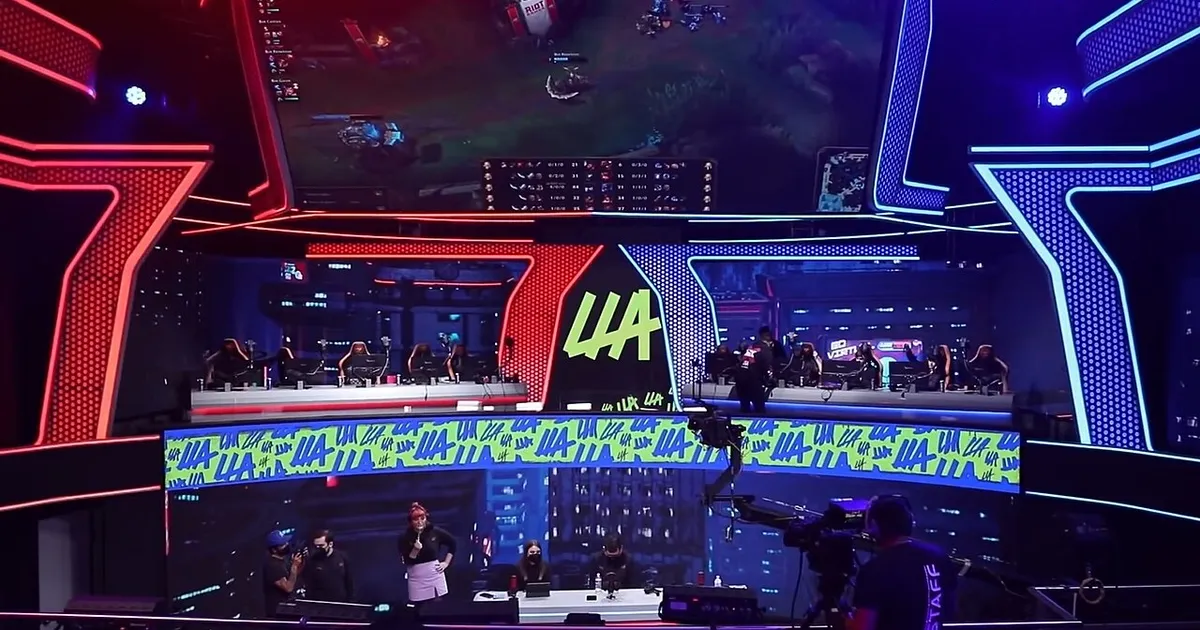
Photo by LLA / Wikimedia Commons / CC BY 3.0
Tactical shooters aren’t the only genre with a serious competitive scene. MOBAs and battle royales have each built esports ecosystems with formats that look nothing alike, largely because the underlying games ask completely different things of their players.
League of Legends: the franchise-league model
League of Legends, developed by Riot Games, pits two teams of five against each other across a single map, with each player controlling a “champion” and taking on a role — top lane, jungle, mid lane, bot lane, or support. Matches are decided by destroying the enemy base after a drawn-out process of securing gold, map objectives, and champion kills. Riot’s competitive structure for League runs through regional franchised leagues, where teams hold permanent slots rather than fighting relegation battles every split, feeding into international events that determine a world champion. That franchise model was a deliberate move toward the kind of stability seen in traditional sports leagues.
Dota 2: the open circuit and The International
Dota 2, developed by Valve, shares the broad MOBA shape with League of Legends — two teams of five, lanes, objectives, a base to destroy — but its competitive scene has historically been structured very differently. Rather than a closed franchise league, Dota 2’s ecosystem has leaned on open qualifiers and third-party tournament organizers, culminating each year in The International, the game’s marquee event. Dota 2 is also known for an unusually deep hero pool and item system, which gives its competitive metagame a reputation for complexity even among genre veterans.
Battle royale competition: Apex Legends and Fortnite
Battle royales present a different challenge for competitive formats, since the core game already has up to a hundred players fighting simultaneously rather than two clean teams. Apex Legends, developed by Respawn Entertainment, runs squads-based competitive play where placement and eliminations both count toward a match score, with tournaments typically scoring several games across a group stage. Fortnite, developed by Epic Games, follows a similar points-based approach but has also experimented with a wider range of formats, from solo tournaments to duo and squad events, reflecting the game’s broader mix of building mechanics on top of standard battle royale combat.
Different genres, different spectator logic
A MOBA match unfolds over a single, continuous 25-to-45-minute game with clear win conditions, which makes it easier to follow as a single narrative. A battle royale tournament is usually a points race across multiple matches, where the tension comes from tracking standings rather than a single decisive fight. Neither approach is objectively better for viewers — they just reward different kinds of attention, which is part of why esports orgs typically build separate content and coaching strategies around each genre rather than treating “esports” as one format.
Whichever scene you follow, understanding the scoring system — objective-based destruction in MOBAs versus placement-and-kill points in battle royales — is the fastest way to make sense of why a team is playing the way they are.
Our picks: Competitive gear
Shop on Amazon
Affiliate links.As an Amazon Associate I earn from qualifying purchases. Links below go to Amazon; prices and availability change, so check Amazon for current pricing.Affiliate disclosure



Illustrative photos: Photo by Jacek Halicki / Wikimedia Commons / CC BY-SA 4.0; Photo by PantheraLeo1359531 / Wikimedia Commons / CC BY 4.0; Photo by Anirban Saha / Wikimedia Commons / CC BY-SA 4.0; Photo by Zephyris at English Wikipedia / Wikimedia Commons / CC BY-SA 3.0