How Discount Stacking Really Works at PC Hardware Retailers
Why some PC hardware discounts can be combined and others cannot, and how to figure out the actual rules before you assume you can stack a coupon on top of a sale.
Why some PC hardware discounts can be combined and others cannot, and how to figure out the actual rules before you assume you can stack a coupon on top of a sale.

Photo by Andykatib / Wikimedia Commons / CC0
“Stacking” — applying more than one discount to a single order — is one of the most misunderstood ideas in online shopping, and PC hardware is a category where the rules trip people up often, partly because component prices already fluctuate so much on their own. Here’s how to think about it before you assume a coupon will layer on top of whatever sale price you’re already seeing.
Sale Prices and Coupon Codes Are Often Mutually Exclusive
When an item is already marked down for a storewide or category sale, that price is frequently the retailer’s floor for the promotion period — meaning a separate coupon code either won’t apply to that item at all, or the checkout system will silently use whichever discount is larger rather than combining both. This isn’t a glitch; it’s usually intentional, because stacking an unlimited coupon on top of an already-discounted price can turn a promotional loss into an unsustainable one for the retailer. Read a sale’s terms for language like “cannot be combined with other offers” before assuming a code will add extra savings on top.
Manufacturer Rebates Are a Separate System
PC components — especially graphics cards, motherboards, and storage — sometimes come with manufacturer rebates layered on top of retailer pricing. These almost always operate independently of any store coupon: the rebate is a separate claim process handled by the manufacturer, not something a store’s checkout system is aware of. Because rebates typically require you to submit proof of purchase after the sale, they’re also the discount type most likely to have a real, binding deadline. Note that date the moment you buy, since rebate windows are usually short and unforgiving.
Store Credit and Trade-In Value Usually Do Stack
Where stacking often does work cleanly is between a coupon code and account-based store credit or trade-in value, since those are applied as separate line items rather than competing discount mechanisms. If you’re trading in an old graphics card or using accumulated loyalty credit, that value is typically deducted after any percentage-based coupon is applied to the remaining balance — worth checking the order summary to confirm the sequence, since the order in which discounts are applied can change your final total.
Category Exclusions Are the Norm, Not the Exception
Even a code advertised broadly often excludes specific categories: pre-built systems, clearance or open-box items, and newly released components are common carve-outs, since those already operate on thinner margins or their own separate promotional pricing. If a code fails silently on an item you expected it to work on, check the exclusions list before assuming the code itself is invalid — the code may be working exactly as intended, just not for that particular product.
The Only Way to Know for Sure
Because stacking rules vary retailer by retailer and sale by sale, there’s no universal formula that tells you in advance whether two discounts will combine. The reliable method is the same one that applies everywhere else: add the item to your cart, apply the code, and read the resulting total carefully against what you expected. If the math doesn’t add up the way you assumed, that’s useful information about the actual rule in play — not a bug to fight against.
Our picks: Graphics cards & SSDs
Shop on Amazon
Affiliate links.As an Amazon Associate I earn from qualifying purchases. Links below go to Amazon; prices and availability change, so check Amazon for current pricing.Affiliate disclosure
NVIDIA GeForce RTX 5070 Ti
16GB card that handles high-refresh 1440p and entry 4K.
Check price on Amazon
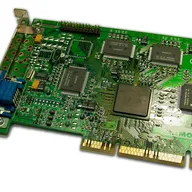
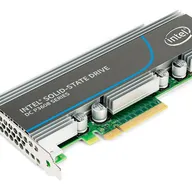
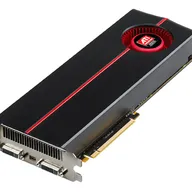
Illustrative photos: Photo by Timothy Borkowski / Wikimedia Commons / CC BY-SA 3.0; Photo by Dmitry Nosachev / Wikimedia Commons / CC BY-SA 4.0; Photo by Advanced Micro Devices, Inc. (AMD) / Wikimedia Commons / Attribution