GPU Price Cycles Explained: When Graphics Cards Actually Get Cheaper
GPU prices move in predictable patterns tied to launches, sales calendars, and generation transitions. Here is how to think about the cycle before buying.
Main page for graphics cards: Graphics Cards →
GPU prices move in predictable patterns tied to launches, sales calendars, and generation transitions. Here is how to think about the cycle before buying.
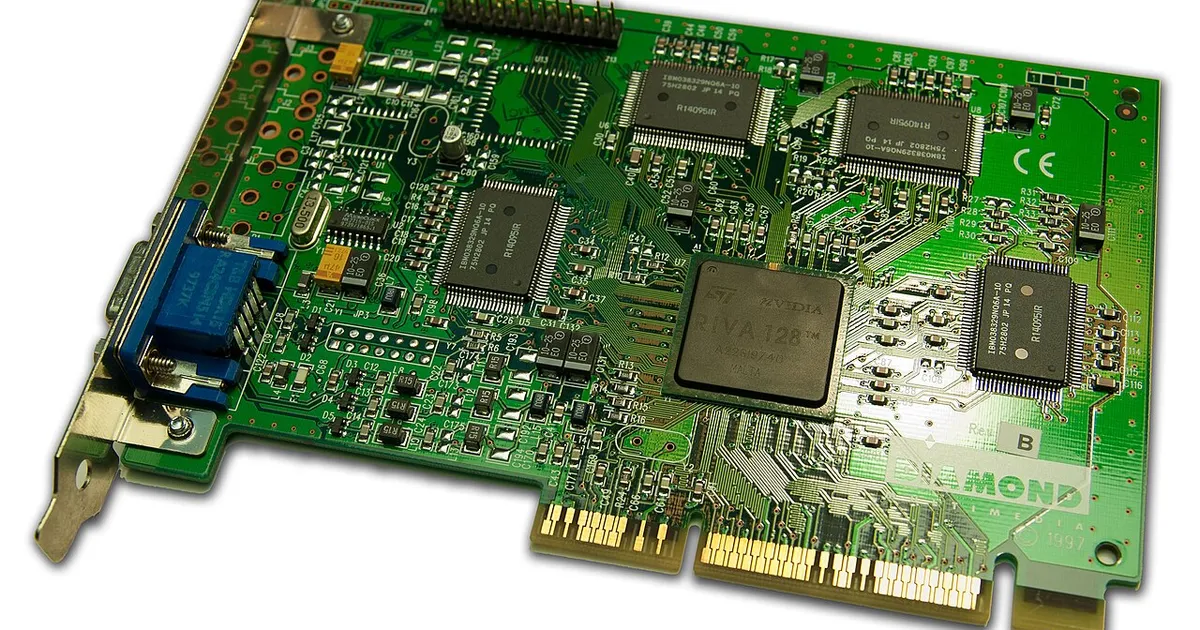
Photo by Timothy Borkowski / Wikimedia Commons / CC BY-SA 3.0
Graphics card prices don’t move randomly. They follow a general cycle shaped by product launches, broader retail sale calendars, and how much demand there is relative to available supply at any given moment. Understanding the shape of that cycle — without needing to predict exact numbers or dates — puts you in a much better position to judge whether now is a smart time to buy.
The Launch Effect
When a new GPU generation launches, two things typically happen to pricing. New flagship and mid-range cards enter at prices set by the manufacturer and tend to stay close to that level while demand is highest and supply is most constrained. At the same time, the previous generation’s cards usually start becoming more competitively priced, since retailers and manufacturers want to clear that inventory to make room. If you don’t need cutting-edge performance, the window right after a new generation launches is often when the previous generation offers its best value relative to performance.
Retail Sale Calendars Layer on Top
Independent of the hardware cycle, general retail sale periods — major end-of-year shopping events, back-to-school season, and periodic manufacturer clearance promotions — add another layer of price movement. These periods tend to bring broader, site-wide markdowns rather than deals on a single isolated product, which makes them easier to evaluate: if a huge number of products across a retailer are discounted at once, that’s a more credible signal of real promotional pricing than a single card with a suspiciously large “percent off” badge.
Supply and Demand Shocks Are Real but Unpredictable
Beyond the predictable launch and calendar patterns, GPU pricing has historically been sensitive to broader demand shocks — sudden spikes in demand from outside the gaming market, supply chain disruptions, or component shortages. These events are genuinely hard to predict and can push prices up or down outside of the normal cycle. The practical takeaway isn’t to try to time these perfectly, but to avoid assuming pricing will only ever move in one direction — a “deal” today doesn’t guarantee prices won’t be lower next month, and waiting for a theoretically perfect moment can mean never buying at all.
Reading the Signals Instead of Guessing Dates
Rather than trying to predict specific dates, watch for concrete signals that tend to precede real price movement:
- Manufacturer roadmap announcements or credible next-generation leaks, which often soften pricing on current-generation cards.
- Site-wide retailer sale events rather than single-product promotions.
- Consistent pricing trends across multiple retailers and price-tracking tools, rather than one outlier listing.
Setting a Personal Price Target
One of the most effective deal-hunting habits is deciding, in advance and independent of any sale, what you’re actually willing to pay for a specific card based on your own budget and performance needs — then using a price-tracking tool to alert you when a listing reaches that number. This flips the dynamic: instead of reacting to whatever discount a retailer decides to advertise, you’re buying on your own terms once your target is genuinely met.
Key Takeaways
- The window right after a new GPU generation launches is often the best time to buy the outgoing generation.
- Broad, multi-product sale events are more trustworthy signals than isolated “deal” listings.
- Demand and supply shocks can move prices unpredictably in either direction — don’t wait indefinitely for a perfect moment.
- Set your own price target ahead of time rather than reacting to marketing urgency.
Understanding these patterns won’t tell you exactly when to click “buy,” but it will help you recognize whether a given moment is a reasonable one — which is the more useful question anyway.
Our picks: Graphics cards
Shop on Amazon
Affiliate links.As an Amazon Associate I earn from qualifying purchases. Links below go to Amazon; prices and availability change, so check Amazon for current pricing.Affiliate disclosure
NVIDIA GeForce RTX 5070 Ti
16GB card that handles high-refresh 1440p and entry 4K.
Check price on AmazonNVIDIA GeForce RTX 5060 Ti 16GB
Budget-friendly 1080p/1440p pick; get the 16GB version.
Check price on Amazon
Illustrative photos: Photo by Timothy Borkowski / Wikimedia Commons / CC BY-SA 3.0; Photo by Advanced Micro Devices, Inc. (AMD) / Wikimedia Commons / Attribution