WOLED vs. QD-OLED Gaming Monitors: What's the Difference?
How LG's WOLED and Samsung's QD-OLED panels differ in color, brightness, text clarity and room-light behavior, with example monitors of each type.
Main page for monitors: Gaming Monitors →
How LG's WOLED and Samsung's QD-OLED panels differ in color, brightness, text clarity and room-light behavior, with example monitors of each type.
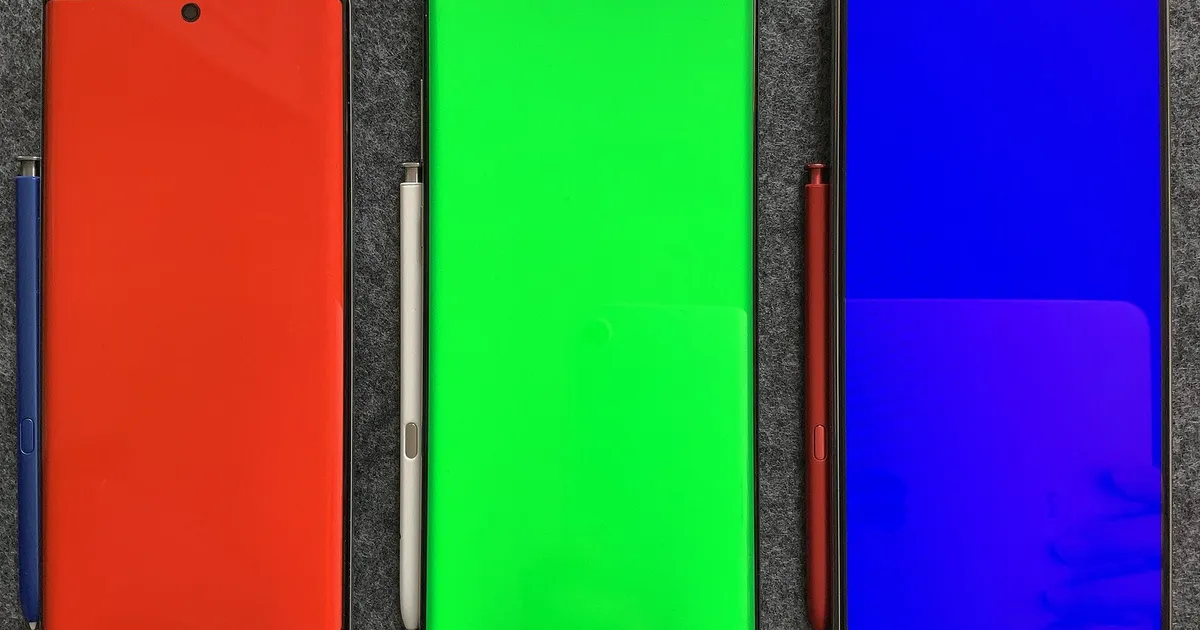
Photo by Samsung Galaxy Note 10 / Wikimedia Commons / CC BY-SA 4.0
Affiliate links.As an Amazon Associate I earn from qualifying purchases. Links below go to Amazon; prices and availability change, so check Amazon for current pricing.Affiliate disclosure
Almost every OLED gaming monitor uses one of two panel types: LG Display’s WOLED or Samsung Display’s QD-OLED. Both offer near-instant response times and true blacks, but they differ in color, brightness, text clarity and how they look in bright rooms. This guide explains the differences by design and listed specs, not lab testing. We don’t list prices; links go to Amazon’s current listings.
Quick answer
| WOLED | QD-OLED | |
|---|---|---|
| Made by | LG Display | Samsung Display |
| Colors | Very good | Exceptionally vivid, especially bright colors |
| Blacks in a bright room | Stay deeper | Can look slightly gray (panel coating) |
| Text clarity | Can show fringing on some layouts | Can show fringing on some layouts |
| Coating | Often matte; glossy on some newer models | Usually glossy |
| Examples | LG UltraGear 32GS95UE, ASUS ROG Strix XG27AQDMG | MSI MAG 271QPX QD-OLED, Alienware AW2725DF |
How they differ
WOLED
WOLED panels use white OLED subpixels with color filters, plus a white subpixel to boost brightness. They tend to keep blacks deep even in lit rooms. Some models offer dual modes, like 4K at 240Hz or 1080p at 480Hz.
QD-OLED
QD-OLED panels use blue OLED light converted by quantum dots into red and green. They produce very saturated colors. Because of how the panel handles ambient light, blacks can look slightly gray in a bright room.
Text clarity
Both use subpixel layouts that differ from standard LCDs, which can cause slight color fringing around text. Newer generations have improved this. If you also work on your monitor, higher resolution (4K) or larger text scaling helps.
Burn-in
Both types can experience burn-in with long-term static content. Modern monitors have protection features, and many brands now include burn-in warranty coverage. Check before you buy. See OLED monitor deals: what to check.
Which should you choose?
- Bright room or window behind you: WOLED, especially with a matte coating.
- Dark room, most vivid colors: QD-OLED.
- Competitive shooters: both are excellent; choose by refresh rate and price.
- Lots of text work: check reviews for text clarity on the specific model.
Other factors that matter more
- Size and resolution: 27-inch 1440p or 32-inch 4K.
- Refresh rate vs your GPU.
- Warranty terms.
- Price on the day.
More in OLED gaming monitors explained.
FAQ
Is QD-OLED better than WOLED? Neither is better overall. QD-OLED has more vivid colors; WOLED keeps deeper blacks in bright rooms.
Do OLED monitors burn in? They can, but with protections and normal mixed use, it’s much less common. Choose a model with burn-in warranty coverage.
Bottom line
Choose WOLED for bright rooms and QD-OLED for the most vivid colors in darker rooms, then decide by size, refresh rate, warranty and price. More picks in our Black Friday monitor guide.
Our picks: OLED monitors
Shop on Amazon
Affiliate links.As an Amazon Associate I earn from qualifying purchases. Links below go to Amazon; prices and availability change, so check Amazon for current pricing.Affiliate disclosure
Illustrative photos: Photo by Badpeon / Wikimedia Commons / Public domain