RTX 5060 Ti 8GB vs. 16GB: Which Version Should You Buy?
Why the same GPU sold with two memory sizes performs differently in some games, and how to decide between the 8GB and 16GB RTX 5060 Ti.
Main page for graphics cards: Graphics Cards →
Why the same GPU sold with two memory sizes performs differently in some games, and how to decide between the 8GB and 16GB RTX 5060 Ti.
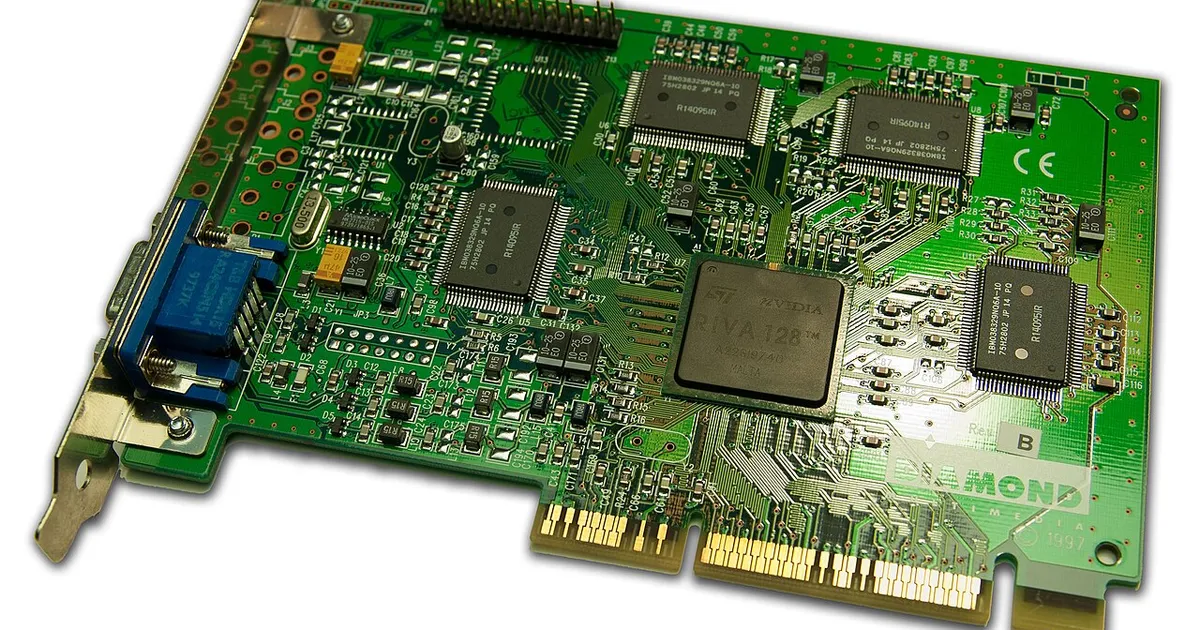
Photo by Timothy Borkowski / Wikimedia Commons / CC BY-SA 3.0
Affiliate links.As an Amazon Associate I earn from qualifying purchases. Links below go to Amazon; prices and availability change, so check Amazon for current pricing.Affiliate disclosure
The RTX 5060 Ti comes in two versions with the same name and the same GPU chip: 8GB and 16GB of video memory. The 8GB version is cheaper, which makes it tempting on Black Friday. This guide explains the difference by listed specs and general behavior, not lab testing. We don’t list prices; links go to Amazon’s current listings.
Quick answer
| RTX 5060 Ti 16GB | RTX 5060 Ti 8GB | |
|---|---|---|
| GPU chip | Same | Same |
| VRAM | 16GB GDDR7 | 8GB GDDR7 |
| New AAA games at high settings | Comfortable | Can run out of VRAM |
| Esports games | Same | Same |
| Keeping it 3+ years | Safer | Riskier |
Why VRAM matters
Video memory holds textures and other game data. When a game needs more than the card has, performance drops sharply, with stutter, texture pop-in or lower frame rates, even though the GPU itself is fast enough.
- Esports games (Valorant, CS2, League) rarely need more than 8GB.
- New AAA games at high settings, especially with ray tracing and frame generation, can exceed 8GB at 1080p and more often at 1440p.
When the 8GB version is fine
- You play mainly esports and lighter games.
- You’re happy to lower texture settings.
- The price difference is large and your budget is fixed.
When to buy 16GB
- You play new AAA games or plan to.
- You game at 1440p.
- You want the card to last several years.
Older PCs
The RTX 5060 Ti uses eight PCIe lanes. On older PCIe 3.0 systems, the 8GB version can lose more performance when VRAM runs out, because data moves more slowly over the bus. The 16GB version is less affected.
Check the listing
Both versions are sold under the same name. Look for “16GB” or “8GB” in the title and specs. See our RTX 50-series deals checklist.
Alternatives
Compare with AMD’s RX 9060 XT 16GB at the same price. See graphics cards for 1080p.
FAQ
Is 8GB of VRAM enough in 2026? For esports and older games, yes. For new AAA games at high settings, it’s increasingly limiting.
Is the 16GB version faster? Only when 8GB runs out. Otherwise they perform the same.
Bottom line
Buy the 16GB version if you play new AAA games or want the card to last. The 8GB version only makes sense for esports at a clearly lower price. More in GPU specs that actually matter.
Our picks: Graphics cards
Shop on Amazon
Affiliate links.As an Amazon Associate I earn from qualifying purchases. Links below go to Amazon; prices and availability change, so check Amazon for current pricing.Affiliate disclosure
NVIDIA GeForce RTX 5070 Ti
16GB card that handles high-refresh 1440p and entry 4K.
Check price on AmazonNVIDIA GeForce RTX 5060 Ti 16GB
Budget-friendly 1080p/1440p pick; get the 16GB version.
Check price on Amazon
Illustrative photos: Photo by Timothy Borkowski / Wikimedia Commons / CC BY-SA 3.0; Photo by Advanced Micro Devices, Inc. (AMD) / Wikimedia Commons / Attribution