NVIDIA vs. AMD vs. Intel GPUs: Features Beyond Frame Rates
How the three GPU makers compare on upscaling, ray tracing, encoders, drivers and software, beyond raw performance.
Main page for graphics cards: Graphics Cards →
How the three GPU makers compare on upscaling, ray tracing, encoders, drivers and software, beyond raw performance.
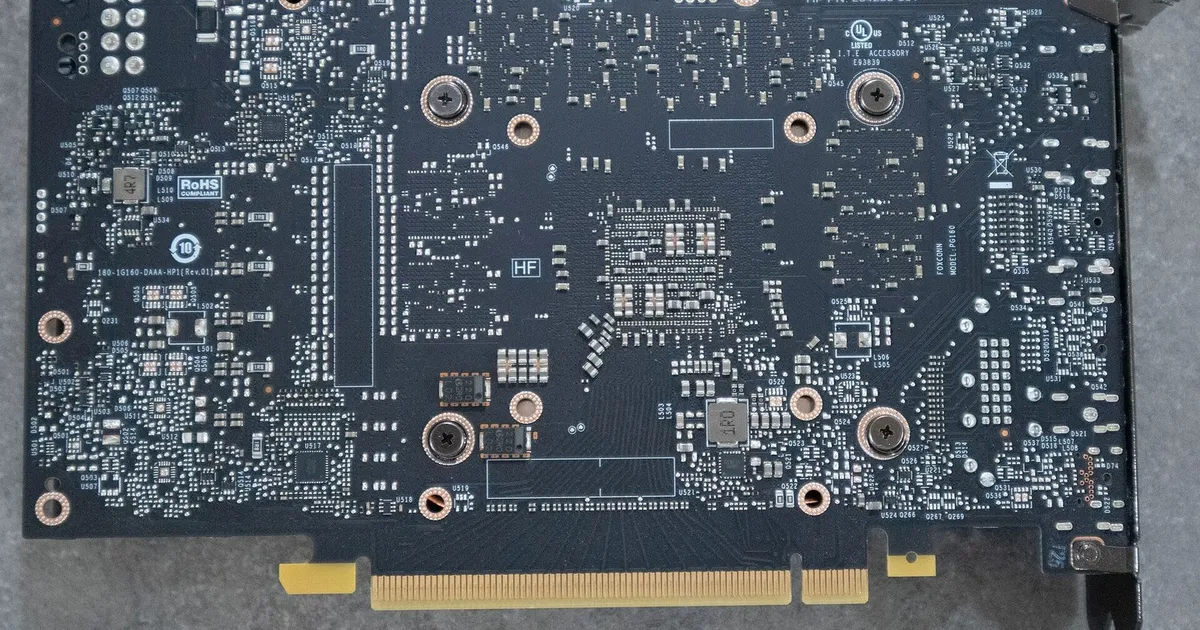
Photo by Mr ATM / Wikimedia Commons / CC BY 2.0
Affiliate links.As an Amazon Associate I earn from qualifying purchases. Links below go to Amazon; prices and availability change, so check Amazon for current pricing.Affiliate disclosure
When graphics cards perform similarly in frame rates, features often decide which is the better buy: upscaling, frame generation, ray tracing, streaming encoders and software. This guide compares NVIDIA, AMD and Intel’s feature sets by design and listed capabilities, not lab testing. We don’t list prices; links go to Amazon’s current listings.
Quick answer
| Feature | NVIDIA | AMD | Intel |
|---|---|---|---|
| Upscaling | DLSS (widest game support) | FSR 4 on RX 9000; FSR 3 on many GPUs | XeSS |
| Frame generation | DLSS Frame Generation, Multi Frame Generation on RTX 50 | FSR frame generation | XeSS frame generation in supported games |
| Ray tracing | Generally strongest | Improved in RX 9000 | Competitive at its price |
| Streaming encoder | NVENC, widely supported | Improved AMD encoders | Strong AV1 encoding |
| Example card | RTX 5070 | RX 9070 | Arc B580 |
Upscaling
Upscaling renders at a lower resolution and reconstructs a sharper image, raising frame rates. DLSS is in the most games; FSR 4 is AMD’s newer, higher-quality upscaler for RX 9000 cards; XeSS works on many GPUs and best on Intel Arc. See upscaling explained.
Frame generation
Frame generation inserts generated frames between real ones for smoother motion. NVIDIA’s RTX 50 cards support Multi Frame Generation. It adds some latency and works best when the base frame rate is already decent. See frame generation explained.
Ray tracing
NVIDIA generally leads in heavy ray tracing and path tracing. AMD’s RX 9000 cards improved substantially. If you play ray-traced showcase games, check benchmarks.
Streaming and creative work
- NVIDIA NVENC is widely supported in OBS and streaming apps.
- AMD and Intel offer capable hardware encoders, including AV1.
- Creative apps may favor one brand; check your software.
Drivers and software
All three provide control panels with performance overlays, recording and settings. Intel’s drivers have improved a lot, but older games can be less consistent on Arc.
How to choose
- Compare performance in your games at your resolution.
- Check feature support in the games you play.
- Consider VRAM for longevity.
- Then compare prices.
FAQ
Is DLSS better than FSR? DLSS has wider game support. FSR 4 has closed much of the quality gap on RX 9000 cards.
Are Intel Arc cards good? At their price, often yes, especially for 1080p and 1440p. Check performance in older games you play.
Bottom line
Choose by your games and the features you’ll use: NVIDIA for ray tracing and DLSS, AMD for value, Intel for budget cards with good encoding. More in GPU specs that actually matter.
Our picks: Graphics cards
Shop on Amazon
Affiliate links.As an Amazon Associate I earn from qualifying purchases. Links below go to Amazon; prices and availability change, so check Amazon for current pricing.Affiliate disclosure
NVIDIA GeForce RTX 5070 Ti
16GB card that handles high-refresh 1440p and entry 4K.
Check price on AmazonNVIDIA GeForce RTX 5060 Ti 16GB
Budget-friendly 1080p/1440p pick; get the 16GB version.
Check price on Amazon
Illustrative photos: Photo by Timothy Borkowski / Wikimedia Commons / CC BY-SA 3.0; Photo by Advanced Micro Devices, Inc. (AMD) / Wikimedia Commons / Attribution